In brief
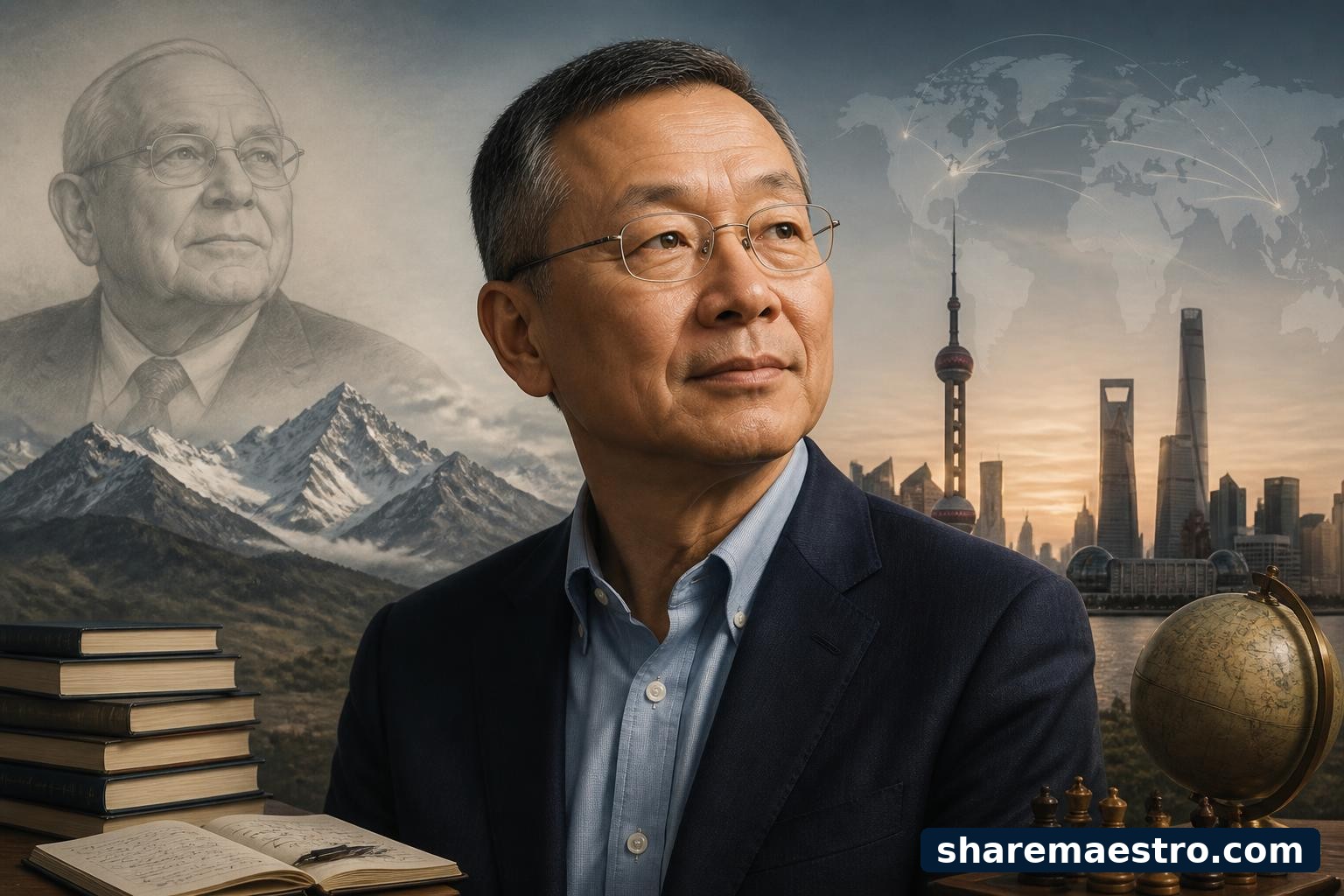
Li Lu's career is one of modern investing's most improbable arcs: a Tiananmen student leader who arrived in the United States as an exile, absorbed Warren Buffett's value-investing doctrine at Columbia, founded Himalaya Capital in 1997, and became Charlie Munger's most trusted outside money manager. His method blends owner-like analysis, unusually patient capital, deep study of China and the United States, and a willingness to concentrate when business quality, price, and long-term compounding align. The result includes spectacular association with BYD, a strong reported early track record, and a continuing influence on value investors seeking global opportunities. It also carries a warning: Li's style demands rare temperament, long-duration capital, political judgment, and a tolerance for being both early and exposed.
- Li Lu matters because he extended the Buffett-Munger value tradition into Chinese and Asian businesses while retaining a distinctly owner-oriented, low-turnover style.
- Himalaya's public U.S. equity filings show a concentrated book, but those filings are an incomplete view of the firm because they exclude many non-U.S. and private holdings.
- BYD made Li's reputation internationally, yet it also illustrates the central risk of his style: a few high-conviction decisions can dominate a record for years.
- His own speeches frame value investing as business ownership, margin of safety, circle of competence, and intellectual honesty rather than a hunt for statistically cheap stocks.
- The hardest question around Li is not whether he understands China, but whether any investor can reliably separate Chinese business compounding from state power, geopolitics, and governance risk.
Performance and evidence
Performance markers
Visual Evidence
Charts and timelines
Risk
Timeline
Philosophy
Performance
The quietest room in the value-investing family
Li Lu's investing career has always carried a dramatic backstory, yet the mature version of his method is almost aggressively undramatic. Himalaya Capital, the firm he founded in 1997, is associated less with trading screens than with reading, private judgment, and a small number of large decisions held for long periods. In a financial culture trained to reward constant motion, Li built his reputation by making inactivity look like work, provided that the inactivity followed exhaustive inquiry.
That contrast is the first key to understanding him. Li's public identity begins with Tiananmen Square and exile, but his financial identity rests on a colder discipline: to think like the owner of a business, not like a renter of a stock certificate. The phrase sounds familiar because it comes from Benjamin Graham, Warren Buffett, and Charlie Munger. Li's significance lies in how he transplanted that framework into markets where language, politics, governance, and historical memory complicate the clean diagrams of American value investing.
He is not a household name in the way Buffett is, and he has not built a public media machine around himself. Yet within the narrower circle of serious value investors, Li occupies a special place. Munger trusted him, BYD amplified him, and Himalaya's sparse public filings reveal a manager comfortable with concentration that would make most institutional allocators nervous. The result is a profile in compounding, restraint, and risk that cannot be separated from the China question.
Why Li Lu matters
Li matters because he turned global value investing from a slogan into a lived test. Many investors claim to buy businesses rather than tickers, but few have done so across the cultural and political distance between Omaha, Seattle, Shenzhen, Hong Kong, and mainland China's corporate system. Li's career asks whether the Buffett-Munger method is portable beyond the United States, and if so, what must be added to make it work.
His answer has never been simple international diversification. It is not buying a country index, not chasing gross domestic product, and not assuming that every emerging-market discount is an opportunity. The method is selective, almost exclusionary. It depends on finding a company whose economics can be understood far into the future, whose managers can be judged, whose price offers protection, and whose ownership rights are not merely theoretical.
That is why Li's story sits apart from many China bulls and China bears. He has argued for the power of Chinese modernization and the compounding potential of businesses formed within it. At the same time, his best-known principles demand skepticism, boundaries, and the humility to know when prediction is impossible. The tension between those two commitments is the source of both his appeal and his danger as a model.
From Tangshan to Tiananmen
Li was born in Tangshan, China, in 1966, the year Mao Zedong's Cultural Revolution began. Public biographies and later profiles describe a childhood marked by disruption, separation, and survival before he became a student at Nanjing University. By 1989, he was among the student leaders associated with the Tiananmen Square protests, an identity that would define how the outside world first came to know him.
The events of 1989 made Li a political figure before he became an investor. He later recounted that period in his memoir, Moving the Mountain: My Life in China from the Cultural Revolution to Tiananmen Square. The memoir matters in an investing profile not because market skill can be reduced to hardship, but because Li's later philosophy keeps returning to adaptation, judgment under uncertainty, and the ability to survive when the surrounding system turns hostile.
After leaving China, Li came to the United States and entered Columbia University. The official biographies compress the achievement neatly: he completed a bachelor's degree, a law degree, and an MBA simultaneously. Behind that clean line is the more important fact that Li was rebuilding an identity. He was no longer only a dissident. He was becoming an analyst of institutions, incentives, and capital.
The Buffett lecture that changed the assignment
At Columbia in 1993, Li encountered Warren Buffett's ideas at a lecture that he later treated as a turning point. The setting was almost too neat for value-investing mythology: Columbia was Graham and Dodd territory, Buffett was the most successful living practitioner of the doctrine, and Li had arrived with skepticism toward stock markets shaped by his experience of China and its history.
What changed was not merely that Buffett showed him stocks could go up. It was that Buffett supplied a moral and analytical reframing. A share was a fractional claim on a business. A market price was an offer, not an instruction. Risk was not volatility in itself, but permanent impairment of capital. Once Li accepted those premises, the stock market could be studied as a system of ownership rather than a casino of symbols.
The distinction became central to his life. Li began investing while still a student, then graduated into Wall Street at a moment when hedge funds and technology speculation were gaining force. He briefly joined Donaldson, Lufkin & Jenrette before founding Himalaya. The career choice was not simply entrepreneurial impatience. It reflected what Munger later recognized in him: a preference for being a principal, not an agent executing someone else's script.
Himalaya's hard first lesson
Himalaya's beginning was not the clean origin story that admirers sometimes imagine. Li founded the firm in 1997, just as the Asian financial crisis was tearing through the region. The early fund sought opportunities in Asia and lost 19 percent in its first year, according to contemporary accounts. One large investor withdrew. For a young manager whose reputation had been built partly on moral courage, the market delivered a different kind of humiliation.
That opening loss is important because it forced a distinction between temperament and technique. Courage in politics did not automatically produce skill in securities analysis. Nor did a great biography protect outside capital. Li had to learn that an investor can be early, thoughtful, and still wrong in timing, position structure, or liquidity management.
The other lesson was about what he did not want to become. Li experimented with the hedge-fund techniques common in the late 1990s and early 2000s, including short selling and faster trading. He later moved away from that style, in part because shorting brought a theoretically unlimited downside and demanded constant adjustment. Himalaya's later identity was born not from a straight line of success, but from rejecting the parts of Wall Street that did not fit Li's temperament.
The Munger apprenticeship without the employee badge
Li met Charlie Munger in 2003 through human-rights contacts, an improbable path to one of the most consequential relationships in modern value investing. Munger did not seem drawn primarily to Li's revolutionary past. He saw a young capitalist with independence, intensity, and a habit of thinking from first principles. The relationship soon became financial as well as intellectual.
Munger's backing changed the structure of Li's career. In 2004, the Munger family invested heavily with Li, giving him the kind of patient capital that can alter an investor's opportunity set. A manager who does not need to perform for redemptions every quarter can hold through volatility, concentrate in a few ideas, and let compounding rather than activity do more of the work.
The relationship also clarified Li's lineage. He was not a Graham net-net bargain hunter in the narrow historical sense. He belonged closer to the Buffett-Munger branch of value investing, where business quality, management judgment, and reinvestment runway matter as much as statistical cheapness. In Li's version, the highest form of value investing became the rare act of buying an exceptional business at a price that still allows a margin of safety.
A philosophy built from four deceptively hard ideas
Li's public speeches reduce value investing to a few principles, but he treats them as demanding disciplines rather than classroom definitions. Stocks represent ownership in businesses. The market exists to serve the investor, not instruct him. The future is uncertain, so margin of safety is essential. A circle of competence must be built slowly and bounded honestly.
The simplicity is deceptive. Many investors can repeat the words. Far fewer can organize a portfolio around them when prices fall, clients grow impatient, or a fashionable sector appears to be minting fortunes elsewhere. Li's speeches return repeatedly to the idea that the market exposes weakness. If an investor does not know the boundary of his knowledge, the boundary will be discovered for him, usually at a cost.
That is why intellectual honesty occupies such a large place in Li's doctrine. The investor's enemy is not only bad data or competition. It is self-deception. A manager can fool clients for a time, colleagues for longer, and himself most dangerously of all. Li's insistence on complete honesty about what can and cannot be known is the hinge between his biography and his process.
Accurate and complete information
Li's best-known operating phrase is the pursuit of accurate and complete information. In practice, that means more than reading annual reports and building valuation models. It means understanding the character of the person controlling the company, the structure of the industry, the incentives of the state and customers, and the ways a reported number can mislead.
This standard helps explain both the power and limits of the Himalaya method. It is powerful because deep fieldwork can uncover what a more superficial market misses. It is limited because complete information is an aspiration, not a destination. No outside investor fully sees a company, especially across jurisdictions, languages, regulatory systems, and political boundaries.
Li's answer is not to abandon prediction, but to narrow it. He seeks situations where the future range can be judged with unusual confidence over many years. That emphasis separates him from both macro tourists and short-term traders. It also explains the small number of positions associated with Himalaya's public portfolio. If the hurdle is deep understanding, most securities must be rejected.
Concentration as discipline and hazard
Concentration is often described as confidence, but in Li's case it is closer to an accounting of scarcity. If genuine insight is rare, and if truly durable companies bought at attractive prices are rarer still, then a long list of holdings can become a confession that the investor does not know which ideas matter. Himalaya's public U.S. filings show that Li is willing to let a small group of holdings dominate the visible book.
The March 31, 2026 Form 13F reported 14 U.S.-listed positions with a total value of about $3.20 billion. Alphabet's two share classes together represented roughly 45 percent of the reported U.S. equity portfolio. Berkshire Hathaway, PDD Holdings, East West Bancorp, and Bank of America also sat near the top of the filing. This is not a diversified institutional closet index. It is a set of large judgments.
The caveat is crucial: a Form 13F is not a full picture of Himalaya. It generally excludes many non-U.S. securities and does not reveal cash, private investments, or Hong Kong-listed shares that may be central to a global manager. Still, the filing confirms the habit. Li is comfortable with a portfolio that visibly bears the marks of choice, omission, and concentration.
BYD and the compounding imagination
BYD became the investment that took Li's reputation beyond value-investing circles. He invested in the Chinese battery maker before it became a global electric-vehicle power, and he introduced the company to Munger. Berkshire Hathaway's energy subsidiary later invested about $230 million for roughly 225 million BYD shares in 2008, an investment widely associated with Munger's conviction and Li's introduction.
The BYD story shows Li's method at its best. It combined local knowledge, business analysis, management assessment, manufacturing insight, and patience. In the early 2000s, BYD was not yet the obvious global champion investors would later recognize. It was a company whose founder, cost structure, battery expertise, and Chinese industrial context had to be interpreted before the financial results fully vindicated the thesis.
Yet BYD also complicates the record. A single extraordinary investment can validate a method, but it can also obscure how dependent a record is on a few outcomes. Munger's praise was sincere, and Berkshire's long holding period became one of the great cross-border investments of the era. But the lesson is not that every investor should look for the next BYD. It is that rare insight, when real, can carry a portfolio for decades.
The record, and the danger of reading it too cleanly
The reported performance attached to Li's early career is striking. A 2010 Wall Street Journal account said his hedge funds had compounded at an annualized 26.4 percent since 1998, compared with 2.25 percent for the S&P 500 over the same period. The same article reported that a late-2004 fund was up 338 percent, around 30 percent annualized, versus less than 1 percent for the index by mid-2010.
Those numbers explain why Munger took him seriously and why Berkshire succession speculation briefly gathered around him. They also need adult supervision. They cover particular vehicles and periods, not a continuously audited public mutual fund record available to every investor. The comparison period began after a crisis and included a huge BYD contribution. Even favorable facts can become misleading when stripped of structure, survivorship, and concentration.
The same 2010 account contained the criticism inside the praise. Without BYD, Li's performance looked less extraordinary, and his willingness to back up the truck could suffer badly in a prolonged bear market. That is not a dismissal. It is the central bargain of the style. Concentration creates the possibility of exceptional compounding because it also creates the possibility of visible, painful error.
China as opportunity and test
Li's China thesis has always been deeper than cheap stocks. In his lectures, he connects equity ownership to modern economic growth, private property, market exchange, and the compounding power of businesses operating within a productive system. He has argued that value investing can function in China, but only where ownership, exchangeability, and business analysis have real content.
That is the opportunity. China's economic rise created companies with scale, engineering depth, consumer reach, and long reinvestment runways. A bilingual investor with cultural fluency, Western capital-market training, and Munger's patience could plausibly see opportunities that both domestic speculators and foreign generalists missed. Li's edge was not simply being Chinese or American. It was being able to think across both systems without fully belonging to either.
But China is also the test. State priorities, capital controls, regulatory campaigns, geopolitical tension, and governance opacity can all interfere with the owner logic at the heart of value investing. Li's own framework demands that investors ask whether property rights and future cash flows can be assessed with confidence. If they cannot, a low price may be a warning rather than a bargain.
The moral tension of the bridge-builder
No serious profile of Li can avoid the moral tension in his career. He first became known as a student leader opposing the Chinese state. Later he became one of the most prominent Western-based investors in China's corporate rise. Admirers see reinvention, realism, and a belief that commerce can bind societies together. Critics see compromise and the uncomfortable spectacle of a former dissident profiting from a system that did not liberalize as many once hoped.
The Financial Times account of Li's life gives that tension unusual force. It describes the shift from activism to capital allocation, the criticisms from some former dissident circles, and the wider collapse of the old assumption that trade would naturally democratize China. Li's defenders point to his record, philanthropy, and bridge-building role. His critics ask what was conceded along the way.
For investors, the tension is not only biographical. It is analytical. If a thesis depends on a country's modernization, the investor must ask what kind of modernization is occurring and who controls its gains. Li's career does not resolve that question. It embodies it. That is why his profile feels larger than a fund biography and more difficult than a simple success story.
The public portfolio in 2026
The most recent public glimpse of Himalaya available as of this profile is the March 31, 2026 Form 13F, filed on May 15, 2026. It showed about $3.20 billion in U.S.-listed equities across 14 entries. Alphabet was the dominant reported exposure, split between Class A and Class C shares. Berkshire Hathaway remained a major visible holding, reinforcing the intellectual and portfolio link to Omaha.
Other reported positions included PDD Holdings, East West Bancorp, Bank of America, Occidental Petroleum, Crocs, Tencent Music Entertainment, H&R Block, Moody's, S&P Global, Apple, and MSCI. The mix is revealing. It is not merely a China book, nor a simple clone of Berkshire. It includes U.S. financials, data and ratings businesses, consumer names, energy, and Chinese-linked ADR exposure.
The filing also underlines a recurring point about Li: the visible portfolio invites analysis but resists imitation. A 13F arrives with a delay, omits non-U.S. holdings, and says nothing about cost basis, expected value, risk controls, or the research behind a position. Copying the names without the time horizon and information base turns a concentrated investor's discipline into a retail investor's shortcut.
A life outside the portfolio
Li's public role has broadened beyond Himalaya. He has served as a trustee of Columbia University and Caltech, and the American Academy of Arts and Sciences lists him among its members. Columbia has also recognized his connection to the university through the renovated Li Lu Law Library, supported by a major naming gift. These affiliations matter because Li's influence now sits at the junction of finance, education, philanthropy, and Asian American civic life.
In 2021, Li chaired the board of The Asian American Foundation as prominent business leaders launched a large initiative to support Asian American and Pacific Islander communities amid rising anti-Asian hate. The effort placed him in a different kind of public leadership role, one tied less to capital allocation than to identity, representation, and institution-building in the United States.
This civic work does not purify or invalidate the investment career. It rounds it out. Li's life has moved through Chinese upheaval, American elite education, Wall Street, Berkshire's inner circle, Seattle-based capital management, and Asian American philanthropy. The common thread is not publicity. It is the construction of institutions that can outlast a single dramatic moment.
What remains useful and dangerous
The useful part of Li Lu's example is demanding and unfashionable. Treat stocks as ownership. Read more than others. Know the boundary of what you understand. Do not confuse volatility with risk. Use the market's liquidity as a servant. Build capital and client structures that allow time to work. When a rare opportunity appears inside the circle of competence, act with enough size to matter.
The dangerous part is that almost every phrase can be abused. Concentration without knowledge is bravado. Patience without reassessment is denial. China expertise without political humility is overconfidence. Admiration for Munger or Buffett can become costume rather than discipline. The fact that Li could hold a company for years does not mean another investor can withstand the same drawdowns, redemptions, or uncertainty.
Li's career ultimately argues that value investing is not a formula. It is a character test conducted through accounting, industry study, institutional memory, and time. His record is impressive, but not clean enough to be myth. That is what makes it useful. Li Lu did not merely bring Munger's doctrine to China. He showed that global value investing works only when conviction is matched by doubt, and when ownership is treated as both a right and a burden.
Disclosure
Educational financial journalism and market research only. Not financial, investment, trading, tax, or legal advice.