In brief
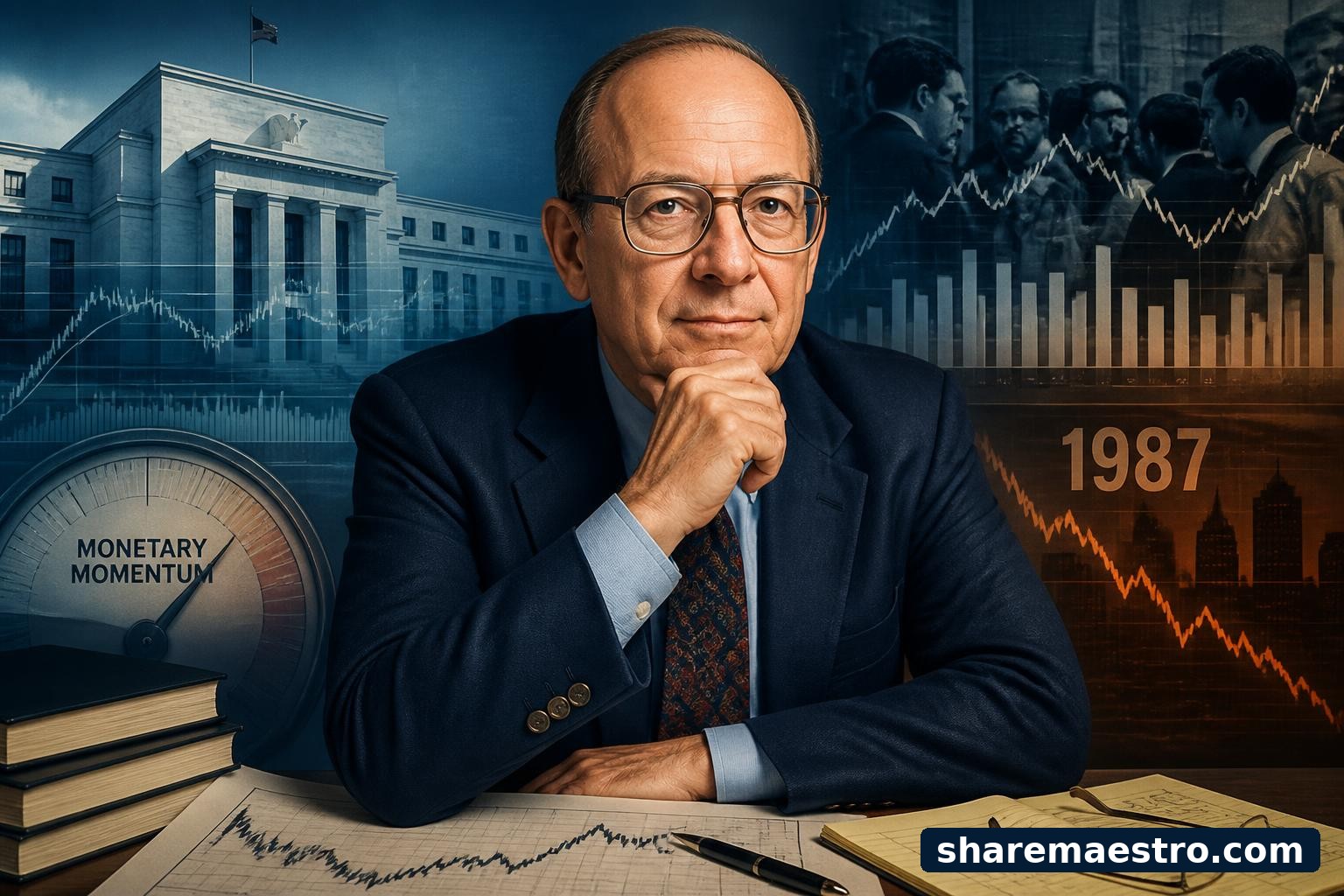
Martin Edward "Marty" Zweig became famous for warning on Wall Street Week just before the 1987 crash, but his real significance lies in the system behind that call. He built The Zweig Forecast into one of the most closely followed investment letters of its era, codified his methods in Winning on Wall Street, helped popularize the put/call ratio and breadth thrust analysis, founded Zweig-DiMenna with Joseph DiMenna, and left behind a market philosophy built around monetary policy, price momentum, sentiment extremes, and flexibility. His record included celebrated successes and painful setbacks, especially during the 1998 hedge fund crisis, making his career a useful case study in both the power and danger of systematic market timing.
- Zweig's fame rests on the October 1987 crash warning, but his broader contribution was a rules-based effort to combine monetary policy, market momentum, breadth, sentiment, and stock selection.
- The Zweig Forecast ran from 1971 to 1997 and was widely recognized for risk-adjusted newsletter performance, while Zweig-DiMenna extended his work into long/short hedge fund management.
- His best-known maxims, "Don't fight the Fed" and "Don't fight the tape," distilled a philosophy that asked investors to align exposure with liquidity conditions and market trend rather than personal opinions.
- Zweig's innovations included sentiment and breadth tools such as the put/call ratio and the Zweig Breadth Thrust, both of which remain part of the technician's vocabulary.
- The 1998 losses at Zweig-DiMenna showed that a disciplined timing framework could still be wrong-footed by liquidity shock, crowded positioning, leverage, and rapidly changing correlations.
Performance and evidence
Performance markers
Visual Evidence
Charts and timelines
Risk
Timeline
Philosophy
Performance
The Friday Before the Fall
On the Friday night before Black Monday, Marty Zweig did not sound like a man trying to become famous. He appeared on Louis Rukeyser's Wall Street Week on October 16, 1987, in the familiar public television setting where market professionals were expected to be witty, concise, and reassuring. Zweig instead gave voice to a private alarm. The market had already been weakening, interest rates were hostile, breadth was poor, and his indicators were not whispering caution. They were sounding an air raid.
The drama of the moment is easy to overstate after the fact, but the dates are unforgiving. The program aired on Friday, October 16. On Monday, October 19, the Dow Jones Industrial Average fell 22.6 percent, the largest one-day percentage decline in its history. In an industry where most forecasts decay quickly into forgotten noise, Zweig's warning became a permanent credential. It was the kind of call that turns a market strategist into a legend, and also the kind that can obscure why the legend mattered.
Zweig did not matter because he saw one crash coming. He mattered because he had spent years trying to turn market timing from hunch into evidence. He was a finance Ph.D., newsletter editor, money manager, television regular, author, and data collector in an era when most market commentary still arrived as opinion dressed up as conviction. His work asked a deceptively simple question: when should investors press risk, and when should they stand aside? The answer, in Zweig's world, began with the Federal Reserve, moved through the tape, and ended with the crowd.
Why Zweig Belongs in the Market Canon
Zweig occupies a peculiar place in modern investing history. He was not a value investor in the Graham tradition, though he cared about valuation. He was not a pure technician, though his name is attached to breadth and sentiment indicators. He was not simply a macro trader, though interest rates and Federal Reserve policy sat at the center of his work. He built a hybrid practice: part academic research, part tactical asset allocation, part growth-stock selection, part risk management, and part media-age market interpretation.
That hybridity is why he remains interesting. Zweig took questions that are still fought over in investment committees and made them operational. Should policy drive equity exposure? How much weight should trend receive when fundamentals look stretched? Can investor sentiment be measured usefully, or only narrated after the fact? Is a successful market-timing record evidence of skill, or a sequence of fortunate calls? Zweig's career did not settle these questions, but it supplied one of the most influential attempts to answer them in the language of rules.
He also bridged retail and institutional finance. The Zweig Forecast gave subscribers a digestible version of his market view. Winning on Wall Street turned his indicators into a public system. Zweig-DiMenna, founded with Joseph DiMenna, showed how the same instincts could be translated into a long/short hedge fund platform. The result was a career that moved from the living room table to a multibillion-dollar money management business, while keeping the same core premise: markets are risky, but they are not random enough to excuse investors from studying conditions.
A Professor With a Trader's Temperament
Martin Edward Zweig was born in Cleveland in 1942 and was drawn to stocks early. The origin story, often repeated in profiles and biographies, has him buying shares as a teenager and forming the ambition to become wealthy through markets. That detail matters less as folklore than as temperament. Zweig was not a late convert to finance. He treated the market as a lifelong subject, one that demanded both curiosity and emotional endurance.
His academic path gave him a different toolkit from the average newsletter writer. He earned a bachelor's degree from the Wharton School in 1964, an MBA from the University of Miami, and a Ph.D. in finance from Michigan State University. He later taught finance at Iona College and Baruch College. At a time when computers were not yet democratized and data work required patience, his edge was partly archival. He looked for patterns across long spans of market history, then tried to reduce those patterns to indicators that could be monitored consistently.
The professor never erased the trader. Zweig admired Jesse Livermore, respected momentum, and believed that the market's action deserved attention even when it offended intellectual pride. This combination was central to his appeal. He could talk like a statistician, but he wrote for people who had to decide what to do with money on Monday morning. He made room for probability, but he was not afraid of action when his evidence aligned.
The Newsletter as Laboratory
The Zweig Forecast began in 1971 and ran for 26 years, a long tenure in a newsletter business crowded with strong opinions and weak audit trails. Its importance was not merely that it existed for a generation. It became one of the rare advisory letters whose record was repeatedly discussed in terms of risk-adjusted results. Hulbert Financial Digest, which tracked newsletter performance from the subscriber's perspective, became an important outside reference point for assessing Zweig's standing.
The record made him more than a television personality. Family notices and later accounts describe The Zweig Forecast as ranking first for risk-adjusted returns during the years Hulbert monitored it, while Forbes described both The Zweig Forecast and the Zweig Performance Ratings Report as top performers over long monitored spans. Newsletter performance statistics always require caution, because model portfolios, implementation friction, taxes, and subscriber behavior can diverge. Still, the repeated recognition helped separate Zweig from the broader culture of market prognostication.
The newsletter format also suited his method. Zweig was not trying to write timeless sermons about owning great businesses forever. He was trying to update probabilities as monetary policy, market trend, sentiment, and individual stock conditions changed. A newsletter allowed him to make those adjustments in public. It also imposed accountability. Signals had dates. Recommendations had prices. Warnings could be mocked before they were vindicated, or quietly forgotten if they failed.
Winning on Wall Street and the Codification of a System
Winning on Wall Street, first published in 1986, is the closest thing to a map of Zweig's mind. Its chapter structure tells the story: market averages, monetary indicators, momentum indicators, the combination of monetary and momentum models, seasonal effects, bull and bear market identification, stock selection, stops, short selling, and sentiment. The book was not a memoir. It was a user's manual for a style of investing that tried to combine market timing and security selection without pretending that either was easy.
At the center was the Super Model, a composite approach that blended monetary conditions and market momentum. Zweig's monetary work considered variables such as the prime rate, discount rate, reserve requirements, and installment debt. His momentum work studied the tape through price, volume, breadth, and indexes such as the Value Line Composite. Later academic work revisited these models and described the way the monetary and momentum scores were combined to form the broader timing signal.
The lasting power of the book lies in its clarity. Zweig did not hide behind mystical chart reading or vague macro impressions. He wanted investors to know which indicators mattered, why they mattered, and how they might be combined. The details can look dated because markets, data availability, and policy implementation have changed. The structure remains recognizable because modern allocators still debate the same hierarchy: liquidity first, trend second, sentiment as a warning device, valuation as context, and risk management as the final discipline.
Do Not Fight the Fed
Zweig's most durable phrase is also his most compressed theory of markets: do not fight the Fed. In its simplest form, the maxim says that equity investors should respect the direction of monetary policy. Falling rates, easier credit, and abundant liquidity tend to support risk assets. Rising rates, tighter money, and restrictive policy make equities work harder for every dollar of return. To Zweig, this was not a slogan for television. It was a historical relationship that deserved to be modeled.
The idea was powerful because it translated macroeconomics into portfolio posture. Investors did not have to forecast every line of the income statement if the cost of money was moving decisively. Lower rates reduce competition from cash and short-term fixed income. They can lower corporate financing costs and support valuation multiples. Higher rates do the opposite. Zweig's insight was not that the Fed mechanically controls the stock market, but that investors ignore monetary climate at their peril.
The weakness of the phrase is also its strength. It is memorable enough to survive, but simple enough to be abused. Central banks influence discount rates, liquidity, confidence, and risk appetite, yet they do not eliminate earnings cycles, fiscal shocks, geopolitical events, or valuation excess. Zweig's own system was broader than the catchphrase. He did not argue that a rate cut alone made every stock attractive, or that a rate hike required permanent retreat. He argued for weighting the odds.
Do Not Fight the Tape
The companion rule was do not fight the tape. If the monetary model supplied the macro weather, the tape supplied the market's own testimony. Zweig believed that major money was made by being on the right side of major moves, not by proving the crowd wrong one day too early. He was a trend follower in the practical sense: he wanted confirmation that prices, volume, and breadth were moving in the direction his broader thesis implied.
This is where his work overlaps with technical analysis but does not reduce to it. Zweig was not drawing lines for their own sake. He wanted to know whether participation was expanding or narrowing, whether strength was broad or confined, whether declines were being bought or distribution was taking control. The Zweig Breadth Thrust, later widely discussed by technicians, captures that instinct. It looks for a rapid move from weak breadth to strong breadth, using advancing issues relative to advancing plus declining issues over a short window.
Breadth mattered because indexes can lie by omission. A capitalization-weighted index may rise while fewer stocks participate, or fall while internal repair has already begun. Zweig's tools tried to see beneath the index level. The modern market, with huge technology weights, ETFs, derivatives, and global liquidity channels, is different from the NYSE-dominated market in which he developed many indicators. Yet the question he asked remains current: is the market moving because a few leaders are carrying it, or because risk appetite has returned broadly?
Sentiment, Options, and the Crowd at Extremes
Zweig's work on sentiment helped turn investor psychology into something more measurable. He is widely credited with creating or popularizing the put/call ratio as a way to assess options-market mood. The logic is straightforward: if traders are heavily favoring calls over puts, optimism may be excessive; if put demand dominates, fear may be extreme. In Zweig's hands, the indicator was not a toy. It was part of a broader effort to observe when the crowd had become too one-sided.
The put/call ratio fit his temperament because it converted anecdote into data. Instead of saying investors seemed euphoric or terrified, he could examine options activity and compare it with market outcomes. That was a meaningful step in an era when sentiment analysis often meant little more than reading magazine covers or cocktail-party chatter. Zweig's contribution was to make crowd behavior part of a repeatable market dashboard.
The indicator also shows why Zweig's legacy must be used carefully. Sentiment measures shift as market structure changes. The rise of listed options, index options, zero-day contracts, institutional hedging, volatility products, and systematic strategies has altered what put and call activity can mean. A high put/call reading may reflect fear, hedging, arbitrage, or structured-product flows. Zweig's deeper lesson is not that one ratio should be worshiped. It is that the crowd leaves footprints, and those footprints must be interpreted in context.
Stock Selection Was Not an Afterthought
Zweig is remembered as a market timer, but his method did not stop at asset allocation. Winning on Wall Street devoted substantial attention to picking stocks, including what he called shotgun and rifle approaches. He favored growth, but not the dreamy kind that ignores price, balance sheets, or earnings quality. His stock work looked for companies with strong and improving fundamentals while remaining alert to market context. A good stock in a bad tape could still be a poor trade.
That nuance often gets lost. Zweig was tactical, but he was not indifferent to business performance. Later descriptions of the Zweig-DiMenna process emphasize fundamental long and short stock selection, including financial health, earnings trends, revenue and margin developments, receivables, product cycles, management quality, competitive position, litigation, and industry dynamics. The macro model set the exposure dial; company research helped populate the portfolio.
This made Zweig different from caricatures of market timing. He did not simply toggle between an index fund and cash. His world included individual equities, shorts, closed-end funds, mutual funds, and hedge fund portfolios. The question was always layered. What is the Fed doing? What is the tape saying? What is the crowd assuming? Which companies have the earnings power to work if the market environment cooperates? Which securities are vulnerable if it does not?
From Public Signals to Private Capital
In 1984, Zweig and Joseph DiMenna founded Zweig-DiMenna Partners, bringing the market-timing strategist's framework into the hedge fund business. The firm became one of the long-running names in flexible long/short investing. In later form, Zweig-DiMenna described its strategies as fundamental long/short equities and global macro, focused on absolute return investing. That institutional evolution matters because it placed Zweig's indicators inside a more complex portfolio machine.
He also created The Zweig Fund in 1986 and The Zweig Total Return Fund in 1988, both closed-end funds associated with his investment philosophy. These vehicles broadened his reach beyond newsletter subscribers and private partnerships. They also exposed a recurring tension in active management: a strategy built on flexibility must operate inside structures with fees, mandates, trading costs, investor expectations, and public performance comparisons.
The hedge fund version of Zweig's world was more ambitious than the newsletter version. Exposure could range from net short to net long, leverage could be used, and portfolios could include long and short equities as well as other instruments. According to later regulatory descriptions, the firm used fundamental analysis for security selection and quantitative models developed by Zweig and his staff to assess equity-market risks and trends. In other words, the old professor's dashboard survived inside the private fund apparatus.
The 1987 Call and the Burden of Being Right
The 1987 call made Zweig famous because it was specific, public, and nearly immediate. He was not alone in seeing danger in the market, and the crash itself had many causes, including a prior run-up, dollar concerns, portfolio insurance, derivatives-linked selling, market-structure weaknesses, and global contagion. Still, Zweig's warning stood out because it came before the worst day, on a program watched by investors seeking practical guidance.
The aftermath strengthened his brand. His hedge fund reportedly surged during the crash, and his reputation as a forecaster was sealed. But being right in spectacular fashion creates a professional hazard. It tempts audiences to convert a probabilistic thinker into an oracle. Zweig's better contribution was not prophecy. It was preparation. He had built a framework that could move him toward defense when multiple conditions deteriorated together.
Black Monday also changed the market he studied. The crash led to reforms, including circuit breakers and changes in clearing and market operations. The Federal Reserve's response helped establish a modern crisis template in which central bank liquidity became part of the market's recovery mechanism. Zweig's Fed-centered framework seemed more relevant after 1987, not less, because the crisis showed how tightly market structure, liquidity, psychology, and policy had become connected.
1998 and the Limits of a Proven Formula
If 1987 was the triumph, 1998 was the reminder. During the Long-Term Capital Management crisis and the broader hedge fund shock, Zweig-DiMenna suffered a severe drawdown. The Washington Post reported that the firm's funds, then among the largest hedge fund operations in America, fell 21 percent in August 1998. They rebounded 10 percent in September, leaving them down about 3.5 percent for the year at that point. Zweig described it as the hardest time of his career.
The episode is critical because it prevents a sentimental reading of Zweig. A model can be historically grounded and still fail under stress. A manager can respect risk and still be caught by correlation shifts, liquidity gaps, crowded trades, and policy surprises. The very tools that make a flexible long/short strategy powerful, including shorts, leverage, derivatives, and rapid exposure changes, can also magnify the cost of being wrong or early.
The 1998 shock did not erase Zweig's record, but it complicated it. It showed that market timing is not a magic exit door. Liquidity can vanish before a model updates. Trades intended to hedge can move together. Investors may demand explanations precisely when the system is least able to provide certainty. For a profile of Zweig, this matters because it restores scale. He was a disciplined strategist, not a supernatural forecaster. His career included both the public glory of a crash call and the private grind of repairing portfolios after a major loss.
The Criticism of Market Timing
The case against Zweig's approach is familiar. Market timing is hard, signals can be mined from history, taxes and trading costs eat into returns, and missed rallies can do lasting damage. Even if a model works in one era, it may decay when market structure changes or when too many investors adopt similar rules. A timing system also imposes a psychological burden. It asks investors to act when consensus may be hostile and to admit error when conditions change.
Zweig understood at least part of that criticism because flexibility was central to his philosophy. He did not imagine that every signal would be perfect. He wanted to tilt probabilities and avoid catastrophic loss. Yet the difference between a probability edge and a false sense of control can be thin. The more precise an indicator appears, the more tempting it becomes to forget that markets adapt. The put/call ratio and breadth thrust are useful examples. Both remain watched, but both require interpretation in a market transformed by derivatives, indexing, electronic trading, and global capital flows.
Academic reassessments of Zweig's monetary and momentum models have found continued interest in the framework, but even favorable modern studies do not eliminate implementation questions. Which data series should be used when old indicators change? What constitutes a Fed tightening in a world of balance-sheet policy, forward guidance, and global central bank coordination? How should a breadth signal be read when the Nasdaq and megacap technology stocks dominate investor attention? The criticism is not that Zweig asked the wrong questions. It is that the answers must keep being rebuilt.
What He Changed
Zweig's influence is visible in the language of markets. "Don't fight the Fed" is now so common that it is often used by people who have never read him. "Don't fight the tape" has become shorthand for respecting price action. The trend-is-your-friend ethic, the use of options sentiment as a contrary indicator, and the attention paid to breadth thrusts all belong to a culture of market analysis that Zweig helped shape.
He also helped legitimate a certain kind of hybrid investor. Before factor dashboards, risk models, and tactical allocation committees became commonplace, Zweig was already combining monetary inputs, price behavior, sentiment measures, valuation context, and security-level fundamentals. His work anticipated the modern portfolio meeting in which macro, quant, technical, and fundamental analysts all argue over the same risk budget. He did not remove judgment from investing. He organized it.
Zweig-DiMenna's continuing existence underscores that the legacy was institutional as well as intellectual. The firm traces itself to 1984 and describes a long record in absolute return investing, with fundamental long/short equities and global macro among its strategies. Later regulatory descriptions still refer to asset allocation techniques based on quantitative models developed by Zweig and his staff. That is a rare afterlife for a newsletter writer's toolkit.
What Remains Useful, and What Remains Dangerous
The useful part of Zweig's legacy is the insistence on evidence before ego. He did not want investors to fight liquidity, fight trend, or ignore sentiment extremes merely because they had a strong view. He understood that the market is an arena of probabilities, not moral victories. When the Fed, the tape, and the crowd all point in the same direction, investors should at least ask whether their contrary opinion is insight or stubbornness.
The dangerous part is the temptation to turn his rules into superstition. Central bank easing is not always enough. Strong momentum can reverse. Sentiment can stay extreme. Breadth can improve and then fail. A crash warning that worked once can lure later investors into seeing 1987 everywhere. Zweig's method requires humility because it is adaptive. Used mechanically, it becomes the opposite of what made him effective.
Marty Zweig's continuing relevance lies in that tension. He gave investors a vocabulary for respecting policy and price, but his own career showed that no vocabulary abolishes risk. The best reading of Zweig is not that markets can be timed with certainty. It is that exposure should be earned by conditions, reduced when evidence deteriorates, and revised without shame when facts change. In an age still obsessed with the Fed, liquidity, momentum, positioning, and crash risk, that remains a stern and useful creed.
Disclosure
Educational financial journalism and market research only. Not financial, investment, trading, tax, or legal advice.