In brief
A famous squash champion, academic statistician, Soros trader, hedge fund star, and author, Victor Niederhoffer stands at the uneasy border between brilliance and fragility in markets. His early work on price reversals anticipated parts of market microstructure and statistical arbitrage. His trading record before 1997 was extraordinary by reported measures, yet two severe collapses, first in 1997 and again in 2007, made his name shorthand for the danger of selling volatility with insufficient staying power.
- Niederhoffer's 1966 work with M. F. M. Osborne on market making and reversals identified transaction-level dependence and price clustering at a time when random walk theory was gaining academic force.
- His trading career fused empirical testing, contrarian instinct, gamesmanship, and a willingness to use leverage in futures and options.
- Reported pre-1997 returns were striking, including claims of roughly 35 percent annualized returns through 1996 and a top ranking by MAR, but those records must be read beside the path-dependent risks that later destroyed the funds.
- The 1997 collapse combined emerging-market losses, short S&P 500 put exposure, margin calls, and a one-day market break that left Niederhoffer unable to survive until a rebound.
- The 2002 to 2006 comeback through Matador showed his resilience and continuing appeal, but the 2007 credit crisis again exposed the limits of leverage and short-volatility trading.
- His continuing relevance lies in a paradox: markets do contain measurable behavioral and microstructure patterns, but exploiting them requires a risk system built for the trades that models most want to dismiss.
Performance and evidence
Performance markers
Visual Evidence
Charts and timelines
Risk
Timeline
Philosophy
Performance
The Speculator and the Shipwreck
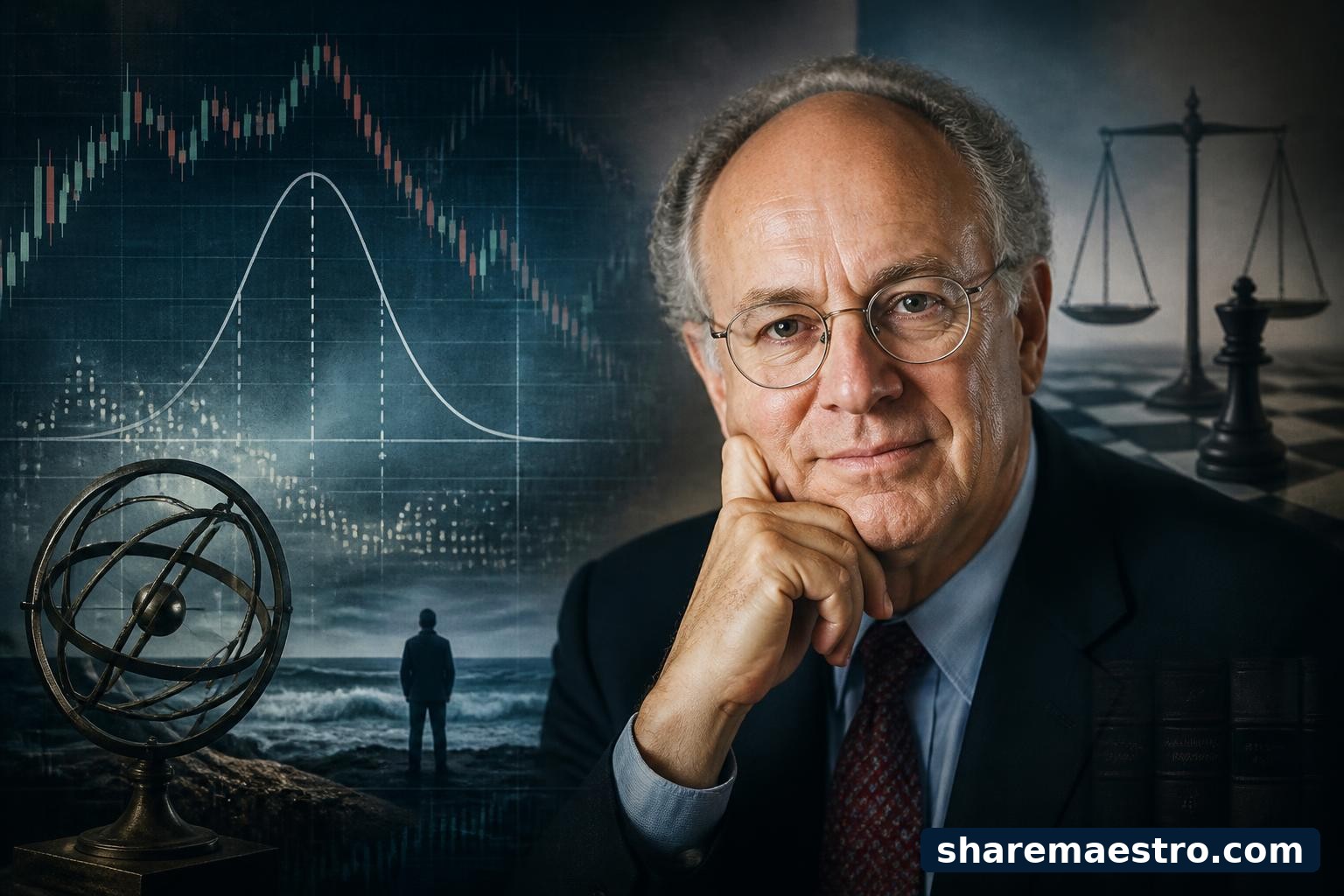
Victor Niederhoffer kept a painting of the Essex where he could see it while trading. The image was not decorative in the usual financier's sense. The Essex was a whaling ship rammed by a sperm whale in 1820, an event later bound into the mythology of Moby-Dick. In Niederhoffer's house, the ship became an instrument of self-rebuke. It reminded him that disaster is not always poetic, deserved, or avoidable. It can also arrive as one brute movement against a vessel that seemed seaworthy the day before.
That was the right emblem for a trader whose career made Wall Street argue with itself. Niederhoffer was not a fraud, nor a charlatan, nor merely a reckless gambler dressed in academic credentials. He was a Harvard-trained economist, a University of Chicago PhD, an early scholar of market microstructure, a partner and manager for George Soros, a five-time U.S. squash champion, and a money manager whose reported returns once placed him near the top of the hedge fund world. He was also the man whose funds were wiped out in 1997 after selling stock-index options into a market break, then forced to close a flagship comeback fund in 2007 after another volatility shock.
The Niederhoffer story matters because it refuses the simple morality play. It shows that a statistical edge can coexist with fatal capital structure. It shows that contrarianism can be both a legitimate source of profit and a psychological trap. It shows that the market can reward a trader for years for accepting risks that appear remote, then demand payment all at once. To study Niederhoffer is to study one of modern speculation's central questions: when does being early, levered, and statistically justified become indistinguishable from being wrong?
Why Niederhoffer Still Matters
Niederhoffer belongs in financial history for reasons that extend beyond the spectacle of collapse. In the mid-1960s, he was studying stock-price dependence, order clustering, and short-horizon reversals when the efficient market hypothesis was becoming a powerful organizing idea in academic finance. His work with M. F. M. Osborne argued that transaction prices were not a featureless random stream. They reflected the mechanics of dealers, limit orders, human preferences for round numbers, and the institutional design of exchange trading.
That intellectual beginning foreshadowed a central business of later quantitative finance: identify tiny, repeatable irregularities in market behavior, test them, size them, and harvest them before other capital erodes the advantage. Niederhoffer did not build Renaissance Technologies, and he did not leave behind the clean institutional franchise of a systematic powerhouse. His operation was far more personal, eclectic, and temperament-driven. Yet the line from academic anomaly hunting to computer-assisted short-term speculation runs directly through his career.
His importance is also cautionary. Many profiles of famous investors resolve into a doctrine that can be packaged for imitation. Niederhoffer's cannot. His method was a lattice of counting, market lore, sports psychology, scientific skepticism, and appetite for risk. Its most useful lesson is not that investors should sell panic or fade weakness. It is that the same features that create high returns can hide an implicit short option against the survival of the enterprise. The profitable question is often, What is the edge? The survival question is, What happens when the edge cannot be held?
Brighton Beach as Trading Floor
Niederhoffer's first market was not a screen, a pit, or a brokerage account. It was Brighton Beach, Brooklyn, where games had odds, reputations had value, and small wagers taught the feel of advantage. Later accounts of his childhood describe stoopball, paddleball, checkers, and sports betting as part of the local curriculum. That background became central to his self-understanding. He saw markets less as elegant discounting machines than as contests among players with habits, fears, tells, and constraints.
His father, Arthur Niederhoffer, was a New York City police officer who later became a professor of sociology and wrote about policing. The family story mattered because Victor's later books cast speculation as both intellectual pursuit and character test. The son carried into markets a combination of discipline, competitiveness, and provocation. He liked finding rules inside games and then pressing those rules until others became uncomfortable. The habit would serve him on the squash court, in academic finance, and in trading. It would also make him vulnerable to the belief that every contest could be outlasted.
Squash turned the psychology into a visible form. Niederhoffer arrived at Harvard without the prep-school squash pedigree common among top American players, learned the game under Jack Barnaby, won the intercollegiate title in 1964, and later won U.S. national singles titles in 1966 and from 1972 through 1975. US Squash credits him with interrupting Sharif Khan's long run at the North American Open in 1975. The athletic record is not a side note. It explains the trader's posture: he believed in preparation, pattern recognition, endurance, and the tactical value of making opponents play under stress.
The Academic Who Argued Prices Were Not Random Enough
The finance world into which Niederhoffer entered was increasingly respectful of randomness. The random walk view of prices did not say markets were perfect in a mystical sense. It said, more practically, that available information was hard to convert into reliable excess return. Niederhoffer's early work pushed against that attitude from the level of the individual transaction. He was less interested in a grand theory of value than in the small frictions and regularities that appeared when actual buyers and sellers met through a market structure.
In 1966, the Journal of the American Statistical Association published 'Market Making and Reversal on the Stock Exchange,' co-authored by Niederhoffer and Osborne. The paper reported striking short-run dependence in ticker prices, including reversal tendencies after small price moves and continuation effects after repeated moves in the same direction. It also described clustering of orders at integers, halves, quarters, and eighths, a reminder that price data are not abstract particles. They are human and institutional artifacts.
That insight remains important. Modern market microstructure now has richer data, faster machines, and more formal models of liquidity provision. But the spirit of the inquiry is recognizable: look beneath daily returns, examine the trading process, and ask whether quoted prices contain patterns created by the very machinery that makes markets possible. Niederhoffer's later trading would take this logic into futures and options. The unresolved problem was whether a trader could turn short-term regularities into durable profits without building a balance sheet too fragile for the days when regularity vanished.
From Professor to Deal Maker to Data Trader
After Harvard, Niederhoffer moved through the University of Chicago and the University of California, Berkeley, but his appetite for markets was never confined to the seminar room. Bloomberg's 2006 profile traced the path from academic work to a boutique investment bank, Niederhoffer, Cross & Zeckhauser, which sought out small private companies and helped sell them to larger buyers. It was an unusual bridge between scholarship and commerce: a young finance academic applying pattern, persuasion, and direct marketing to the market for small businesses.
By 1979, the emphasis had shifted toward commodities trading. Niederhoffer began with gold and silver, then moved into fixed income and foreign exchange. The machinery was primitive by later standards, but the ambition was recognizable as quantitative. Historical prices were entered into linked Radio Shack TRS-80 computers to search for predictive relationships among markets. The romance of the story lies not in the hardware, but in the principle: replace broker superstition with counted evidence, then use the evidence to trade faster and more decisively than rivals.
Niederhoffer's own site later described the formation of NCZ Commodities, also known as Niederhoffer Investments, as a consequence of those academic studies of market behavior. The firm became a vehicle for a style that was empirical but not sterile. It tested relationships, but the person deciding how hard to press them was still Victor Niederhoffer. That distinction would matter. A model can say a move is statistically overdone. A portfolio manager decides how much capital to risk on the belief that the overdone move will reverse before financing disappears.
The Soros Connection and the Trendless Market
George Soros gave Niederhoffer both capital and a larger stage. Bloomberg reported that Soros entrusted him with a separate account in 1981 and that Niederhoffer later returned the money after concluding that he had temporarily lost his edge. Soros's assessment was respectful but pointed. Niederhoffer made good money when markets were moving in a choppy, aimless fashion, Soros wrote, but the approach had a flaw: it was valid only in a trendless market.
That sentence is the cleanest critique of Niederhoffer's mature strategy. A short-term contrarian can thrive when markets overreact and then mean-revert. The trader buys weakness, sells strength, collects premium from anxious hedgers, and profits when liquidity returns. But the strategy is structurally uncomfortable with trends that are not noise. When a decline is the beginning of repricing rather than a panic to be faded, the contrarian's statistical memory becomes a liability.
Niederhoffer's integrity in returning the Soros account while ahead is part of his legend because it complicates the later caricature. He was not unaware that edge could decay. He was not ignorant of risk. He could step away. The tragedy is subtler: knowing that a method has regimes in which it works does not guarantee that a trader will recognize, in real time, the regime in which it no longer applies. Soros supplied the warning. Markets later supplied the test.
The Method: Count, Fade, Press, Repeat
Niederhoffer's process was never a single formula. It was a broad search for conditional tendencies in liquid markets, especially short-horizon moves that appeared to arise from fear, forced flows, institutional habits, and overreaction. He liked analogies from music, biology, sports, literature, and games, but the trading core was empirical: ask whether a pattern had occurred before, measure what tended to follow, and separate tested relationships from market folklore.
The mature version relied heavily on futures and options. Bloomberg described his comeback-era trading in S&P 500 futures and options, often with positions held for one to five days and traded many times a day. The stance was generally bullish and contrarian. That did not mean simply buying and holding stocks. It meant using derivatives to express the view that declines often created favorable short-term expectancy and that panic itself could be priced too richly.
This is where the elegance and danger met. Selling put options can resemble insurance underwriting: the seller collects premiums repeatedly until the insured event occurs. If position sizes are modest, collateral is ample, and hedges are robust, the activity can be a disciplined business. If leverage is high, liquidity is assumed, and the same adverse event moves prices, volatility, and margin requirements at once, the trader may be right about the eventual rebound and still be unable to remain solvent. Niederhoffer's method was not merely contrarian. It was contrarian with financing risk.
The Record Before the Fall
The reported record before 1997 was remarkable. Niederhoffer's own biographical account states that Niederhoffer Investments returned 35 percent a year from inception through 1996 and that MAR ranked him the No. 1 hedge fund manager in the world. Bloomberg also reported that by the mid-1990s his returns had averaged 35 percent annually for 15 years and that Business Week named him the best U.S. commodities fund manager in 1994.
Contemporaneous press coverage captured the awe and anxiety. The Washington Post wrote after the collapse that he had produced millions for himself and investors since 1982, but also that his style delivered a terrifyingly bumpy ride and sometimes doubled investors' money in a single year. The same article noted a 60 percent gain in 1994. Such figures explain why sophisticated allocators tolerated volatility. The rewards appeared large enough to justify discomfort.
Yet the record is best read as path-dependent evidence, not proof of invulnerability. High average returns can be generated by genuine skill, hidden leverage, volatility selling, concentrated exposure, or some mixture of all four. Niederhoffer's pre-1997 numbers may include real alpha from short-term empirical trading. They also came from a structure that could be ruined by an event outside the recent sample. That is the unresolved accounting problem of many great trading records: what looked like return may partly have been compensation for catastrophe risk not yet charged.
Thailand, Puts, and October 27, 1997
The first collapse began before the famous October market break. In early 1997, Niederhoffer bet heavily on Thai stocks. He later conceded that this was a qualitative leap rather than an empirical one, an attempt to apply methods from liquid markets to an emerging market whose institutions, currency regime, and credit cycle were different. When the Bank of Thailand abandoned the baht's dollar peg on July 2, 1997, the pressure intensified. By August, Bloomberg reported, Niederhoffer faced potential losses of $50 million.
Those losses weakened the capital base behind his U.S. positions. In October, still bullish, he sold S&P 500 put options, effectively taking the other side of investors seeking protection against a market fall. The logic was familiar: sharp declines had often been buying opportunities, and put buyers often overpaid for fear. But on October 27, 1997, the Dow Jones Industrial Average plunged more than 500 points and the New York Stock Exchange closed early. The move transformed a premium-collection trade into an immediate liquidity crisis.
The Washington Post reported that Niederhoffer could not produce the $50 million needed to cover the Monday losses and was broke before the Tuesday rebound. The cruel detail is that his broad instinct that panic could reverse was not absurd. The market did recover. But a leveraged derivatives portfolio is judged not only at the final score, but at every margin call on the way there. Niederhoffer did not lose because markets never mean-reverted. He lost because his capital structure could not survive the interval between panic and normalization.
Aftermath, Blame, and the CME Fight
The aftermath was personal and theatrical because Niederhoffer's life had become entwined with his success. He shut the firm, mortgaged his house, sold treasured antique silver, and spoke later of depression and humiliation. The fall acquired symbolic force because it touched every part of the identity he had built: trader, collector, patron, competitor, intellectual, father, host. The New Yorker and Bloomberg both portrayed a man trying to rebuild not only capital but standing.
He also fought over the market mechanics of the disaster. In 1999, Niederhoffer and funds he managed sued the Chicago Mercantile Exchange, alleging that exchange actions around settlement prices and the 1997 crash had contributed to losses. The CME's public response was forceful, calling the lawsuit without merit and saying the claims rested on incorrect information and unsupportable allegations. The exchange also said it had investigated his claims and offered access to staff and records.
For investors, the legal dispute was less important than the portfolio lesson. Markets under stress are not the same markets used to build a backtest. Trading halts, early closes, widening spreads, broker behavior, settlement conventions, and margin calls become part of the trade. Niederhoffer's own later writing acknowledged the depth of the fall and the difficulty of returning after counterparties, customers, and suppliers were afraid. The collapse turned risk management from an abstraction into a social fact: after a blowup, the market may still quote prices, but it may no longer quote them to you on usable terms.
The Comeback and the Matador Years
Niederhoffer's comeback was not a quiet retirement with occasional essays. By 1998 he was trading again for his own account. In 2002 he began managing money for offshore clients through Matador Fund, backed by Mustafa Zaidi, an old investor. Bloomberg reported that Matador began with $2 million in February 2002 and grew into a $346 million fund by 2006. The comeback restored the old magnetism: allocators who understood the prior collapse still wanted access to the trader's edge.
The rebuilt operation was supposed to be narrower. Zaidi's reported condition was that Matador would focus on S&P 500 futures and options rather than wandering into unfamiliar markets. The strategy remained intensely active, bullish, contrarian, and levered, but the comeback narrative emphasized specialization and humility. Niederhoffer himself said after 1997 that he no longer believed he could master all markets and would not reach for faraway opportunities such as Thailand.
The numbers revived the legend. Bloomberg reported that since 2002 he had turned $2 million into a $346 million hedge fund, posted a 56 percent return in 2005, and had averaged 41 percent annually in that comeback period. The New Yorker later reported that Matador rose 56 percent in 2005 and that his funds were up between 30 and 40 percent in the first six months of 2007. The problem was that the comeback still carried the family resemblance of the original strategy: high return, high variation, and dependence on surviving volatility.
The Second Blowup
The second crisis arrived through the credit and quant turmoil of 2007. Market volatility, subdued for years, began to surge. The New Yorker described a VIX that had fallen from above 30 in early 2003 to about 10 in early 2007, then jumped above 20 by late July and hit 37 on August 16. For a trader who sold options and leaned into weakness, the shift was more than a mark-to-market problem. It changed margin, liquidity, and the cost of remaining in positions.
The Chicago Mercantile Exchange raised margin requirements for options on S&P 500 futures, according to The New Yorker, and Niederhoffer was asked to double the capital supporting his positions. Some assets were down sharply, others were hard to value, and the portfolio had too many moving parts to provide comfort when counterparties wanted cash. That is the recurring pattern in his career: volatility did not merely make prices move. It tightened the financing channel through which the strategy had to pass.
In September 2007, Niederhoffer was forced to close two funds, including Matador, after the flagship declined by more than 75 percent, The New Yorker reported. He repaid lenders and returned what remained to clients. Again, there was the possibility that, with more time and liquidity, positions might have recovered. Again, that possibility was irrelevant to the investors who needed a fund to survive the path. The second blowup was harsher reputationally than the first because it attacked the central claim of the comeback: that the lesson had been learned deeply enough.
The Critics Were Not All Saying the Same Thing
Niederhoffer's critics came from different schools. Nassim Nicholas Taleb focused on tail risk and the seductive danger of strategies that earn small, frequent profits while remaining exposed to rare, devastating losses. In Malcolm Gladwell's New Yorker account, Taleb saw Niederhoffer's short put exposure as the opposite of his own search for convexity. The disagreement was not merely about one trade. It was about whether a trader should sell insurance on disaster or buy it when others underprice the possibility.
Sol Waksman, who tracked hedge fund performance and had invested with Niederhoffer, offered a more practical allocator's critique. Bloomberg quoted him saying he had not fully understood the risks Niederhoffer was taking and did not have the stomach to invest again. The Washington Post quoted Waksman after the 1997 collapse calling the trade a violation of a cardinal rule: a professional must know when to exit before a position can wipe out the account.
Soros's criticism was different again. He did not deny Niederhoffer's brilliance. He questioned the regime dependence of the approach. A method that works in trendless markets can be both skillful and incomplete. Later skeptical accounts of expertise used Niederhoffer as a case study in how credentials, high returns, and intellectual force can obscure fragility. Taken together, the critics make a stronger point than any single insult: Niederhoffer's failure mode was not stupidity. It was the recurring mismatch between probabilistic edge and existential exposure.
Influence Without an Institution
Niederhoffer's influence is difficult to measure because it did not flow mainly through a surviving firm with a stable brand. It passed through people, habits of thought, and the broader normalization of short-term empirical trading. His own account lists former employees and associates who went on to significant careers, including Monroe Trout, Roy Niederhoffer, Stu Rose, and John Hummer. Some of those claims are hard to compare across careers, but the network itself is unmistakable: Niederhoffer's shop became a training ground for traders who learned to treat markets as measurable contests.
Crabel Capital's later leadership also acknowledged the connection. In a Top Traders Unplugged interview, Michael Pomada said several people at Crabel had worked at Niederhoffer's shop and described Victor as an unusually eclectic thinker about markets. That testimony is valuable because it comes from a firm associated with short-term systematic futures trading, an area where the Niederhoffer imprint is plausible: behavior, pattern, liquidity, and disciplined repetition.
The academic influence is cleaner. The 1966 paper on market making and reversal remains a cited early contribution to the study of microstructure and short-run price dependence. In that sense, Niederhoffer's career split into two legacies. One is intellectual and durable: markets have mechanics, and mechanics create patterns. The other is biographical and cautionary: the person who finds the pattern can still fail if the pattern is financed with too much confidence. Few figures embody both lessons so completely.
What Remains Useful and What Remains Dangerous
The useful part of Niederhoffer is his refusal to accept market commentary without counting. He distrusted ballyhoo, anecdotes, and after-the-fact explanations. He wanted hypotheses that could be tested. That instinct remains essential in a market culture still crowded with stories that sound plausible because they arrived after the price move. His best work asks traders to move from narrative comfort to measurable proposition.
The dangerous part is the temptation to convert a measured tendency into a license for maximum exposure. Mean reversion is real in many settings, but not always in the time frame a portfolio requires. Volatility can be overpriced, but the seller of volatility must finance losses exactly when financing is most expensive. Liquidity can look abundant until many traders need it simultaneously. The lesson is not that Niederhoffer's ideas were useless. It is that no statistical idea is complete until it specifies position size, collateral, stop conditions, counterparty behavior, and the cost of being unable to wait.
Niederhoffer's continuing relevance lies in that tension. He anticipated important parts of quantitative speculation, then lived through the consequences of neglecting the most brutal part of quant finance: the distribution's left tail is not just a number. It is a series of phone calls, margin notices, bid-ask spreads, forced sales, angry investors, and reputational impairment. Markets may forgive a trader once. They may even give him a second act. They do not forgive a strategy that cannot survive long enough for its probabilities to matter.
Disclosure
Educational financial journalism and market research only. Not financial, investment, trading, tax, or legal advice.